

Prostate cancer is one of the most common types of cancer in men, especially middle-aged and older men. Since the disease can develop slowly and may not present symptoms in the early stages, it is important to understand why middle-aged men already belong to the increased risk group.
What is prostate cancer?
Prostate function
The prostate is a small gland located in the male pelvic region, below the bladder and in front of the rectum. Its main function is to produce prostatic fluid, which is an essential part of semen. Prostatic fluid protects and nourishes spermatozoa, contributing to male fertility. Additionally, the prostate plays a role in controlling the flow of urine, as it surrounds the beginning of the urethra. When prostate function is impaired, it can affect both reproductive health and urination.
Nature of the disease
Prostate cancer is a malignant tumor that develops from the cells of the prostate gland. This disease may initially develop slowly and remain unnoticed, but in certain cases, it can also spread rapidly to other parts of the body. Prostate cancer differs from other forms of cancer because its symptoms can be absent for a long time.
Stage anxiety
Prostate cancer is the most common form of cancer in men next to non-melanoma skin cancer. Statistics show that its incidence increases with age. In middle-aged men, especially starting from the age of 50, the risk begins to increase significantly. In Estonia, hundreds of new cases are diagnosed every year, making it a serious public health problem.
Causes of prostate cancer
The role of genetics
Genetics plays an important role in the development of prostate cancer. If close relatives, such as a father or brother, have had prostate cancer, the risk of developing the disease yourself is also increased. Family history may indicate that there are genetic predispositions in the body that increase the likelihood of getting the disease. If there is a history of cancer in the family, it may be sensible to consider genetic counseling to assess your risk and, if necessary, start regular health check-ups.
Hormonal changes
Hormones play an important role in prostate health. Testosterone, which is the primary male sex hormone, affects the growth of prostate cells. As we age, hormonal changes, such as a decrease in testosterone levels and an increase in estrogen levels, can increase the risk of prostate cancer. These changes can cause abnormal multiplication of prostate cells, which may lead to the development of cancerous tumors.
Hormonal balance can also be affected by certain medications or medical conditions. Therefore, it is important to monitor your health and consult a doctor if changes occur in the body.
Impact of lifestyle
Lifestyle directly affects prostate health. Unhealthy eating, lack of exercise, and overweight can increase the risk of prostate cancer. High-fat foods and a lack of dietary fiber may promote the development of the disease. Also, smoking and excessive alcohol consumption can damage prostate cells.
From which month does the risk increase?
Midlife risk surge
Prostate cancer risk in men usually begins to increase from the age of 50. This is due to several age-related factors, including hormonal changes and genetic predispositions. Although younger men can also develop the disease, the risk is higher precisely in middle age, when the body begins to experience changes associated with aging.
Hormonal and cellular changes
In middle age, hormonal and cellular changes occur in the body that can increase the risk of prostate cancer. A decrease in testosterone levels and an increase in estrogen levels can promote the growth of abnormal cells in the prostate. These changes are part of the aging process and can make the development of prostate diseases more likely.
Main symptoms
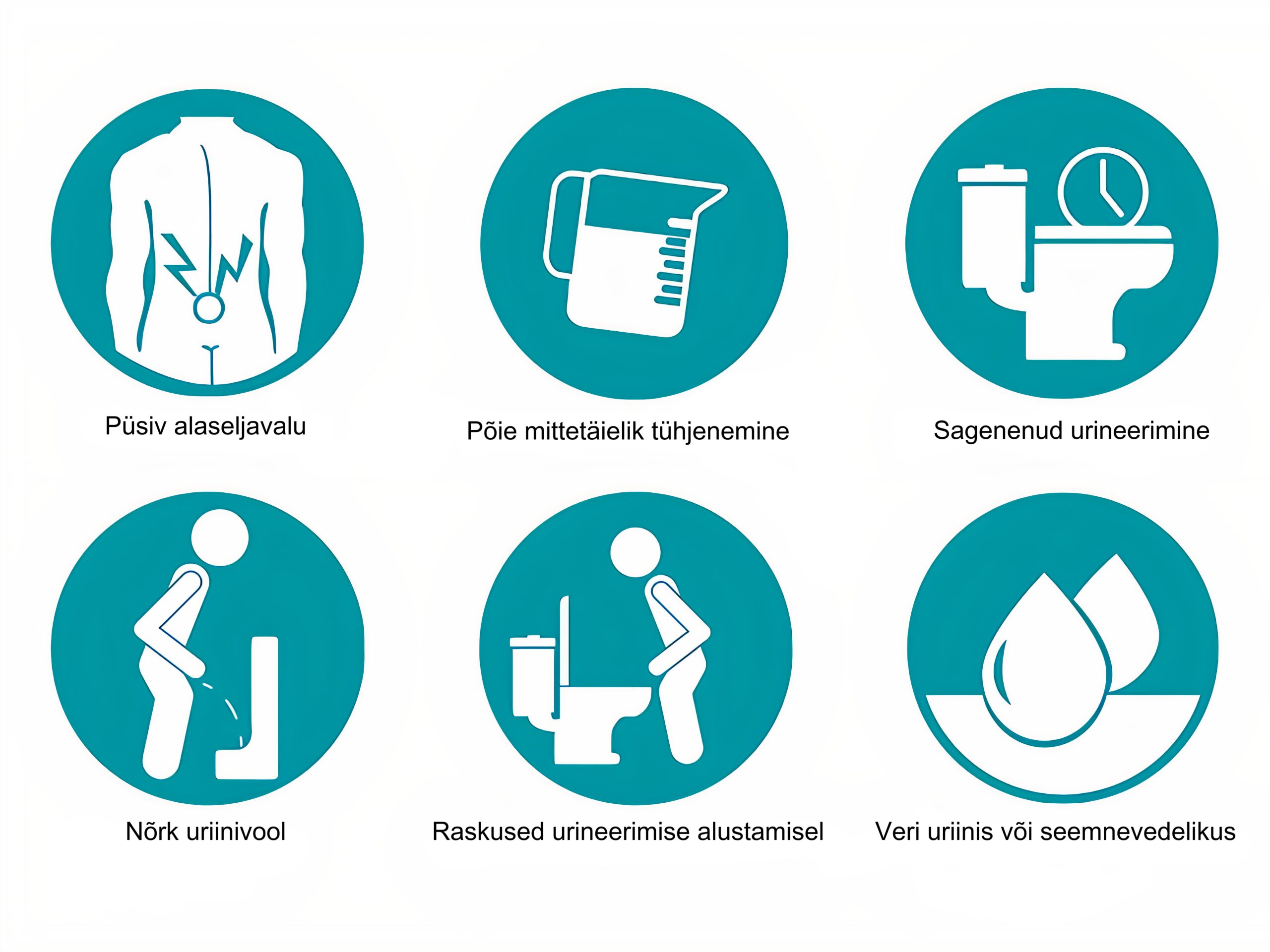
Source: AnatomyStuff
Symptoms of prostate cancer may be mild at first or absent altogether. However, as the disease progresses, several signs may appear that indicate prostate problems. Below are the main symptoms you should pay attention to.
Urination disorders
Urination disorders are often the first signs indicating prostate problems. When urination becomes more difficult, it can be an important warning sign. In the case of prostate cancer, the following symptoms may occur:
weak urine stream;
It takes time to start urinating;
intermittent urine flow;
incomplete bladder emptying.
Symptoms of throat irritation
Symptoms of prostate irritation can be very bothersome and affect daily life. In the case of prostate cancer, these symptoms may include:
frequent urination, especially if the need to go to the toilet arises more often than every two hours;
nocturia, which disrupts sleep;
Urgent need to urinate that is difficult to postpone.
Pain and other symptoms
In later stages of prostate cancer, pain and other symptoms may also appear. These may include:
Pain in the pelvic region or lower back.
Discomfort or pain during urination.
Blood in urine or semen.
Erectile dysfunction.
How to prevent the development of prostate cancer or its progression?
Healthy nutrition
Healthy nutrition is an important part of preventing prostate cancer and slowing the progression of the disease. Dietary habits that are rich in fruits and vegetables, whole grains, and low-fat proteins help reduce the risk of prostate cancer and its development. It is also important to limit the consumption of processed foods, red meat, and high-fat foods, as these may increase the risk of the disease.
A recent scientific study, published JAMA Oncology magazine, confirms that a healthy diet containing sufficient amounts of fiber, vitamins, and minerals can help prevent the development of prostate cancer and even its progression in already diagnosed patients. The results of the study emphasize the importance of a balanced diet in slowing the growth of cancer cells (Su et al., 2024).
Regular exercise
Physical activity helps maintain a healthy weight and improves blood circulation. Regular exercise reduces the risk of chronic diseases, including prostate cancer. Physical activity also supports hormonal balance, which is important for prostate health.
Movement does not have to be complicated. 30 minutes of moderate physical activity every day, such as walking, swimming, or cycling, can significantly improve health. If your lifestyle is rather sedentary, it is worth starting with small steps, such as choosing stairs instead of elevators or taking short walks during the workday.
Medical monitoring
Regular medical monitoring is one of the most effective ways for the early detection of prostate cancer. Through regular check-ups, it is possible to identify prostate diseases before they become serious. The risk of prostate cancer typically increases starting from the age of 50, but if close relatives have had prostate cancer, it is recommended to start check-ups even earlier.
Prostate cancer screening tests are recommended for all men starting from the age of 50. Those with a hereditary predisposition should start testing from the age of 40.
In addition to traditional screenings, cancer tests can offer an additional option for the early detection of cancer by identifying multiple types of cancer through a simple blood sample. These tests can detect traces of cancer molecules in the body, providing more precise information at an early stage of the disease when other methods may still be less sensitive. Therefore, such tests can be a valuable addition to health checks, offering greater peace of mind and the opportunity for timely intervention.
Early detection of cancer can be life-saving, as timely treatment significantly increases the chances of recovery. A healthy lifestyle, including a balanced diet and daily exercise, helps reduce the risk, but regular health check-ups and cancer screenings can provide additional reassurance and detection opportunities that may be life-saving.